Wellbore BioChemistry

Wellbore BioChemistry: Where the Problems Originate

The problems that drive up lifting costs and drive down profits start downhole, where the oil’s chemistry and the well’s biology meet. Treat them there, and the symptoms stop coming back.

Revenue vs. profit

Revenue looks good. Then come the thousand cuts.

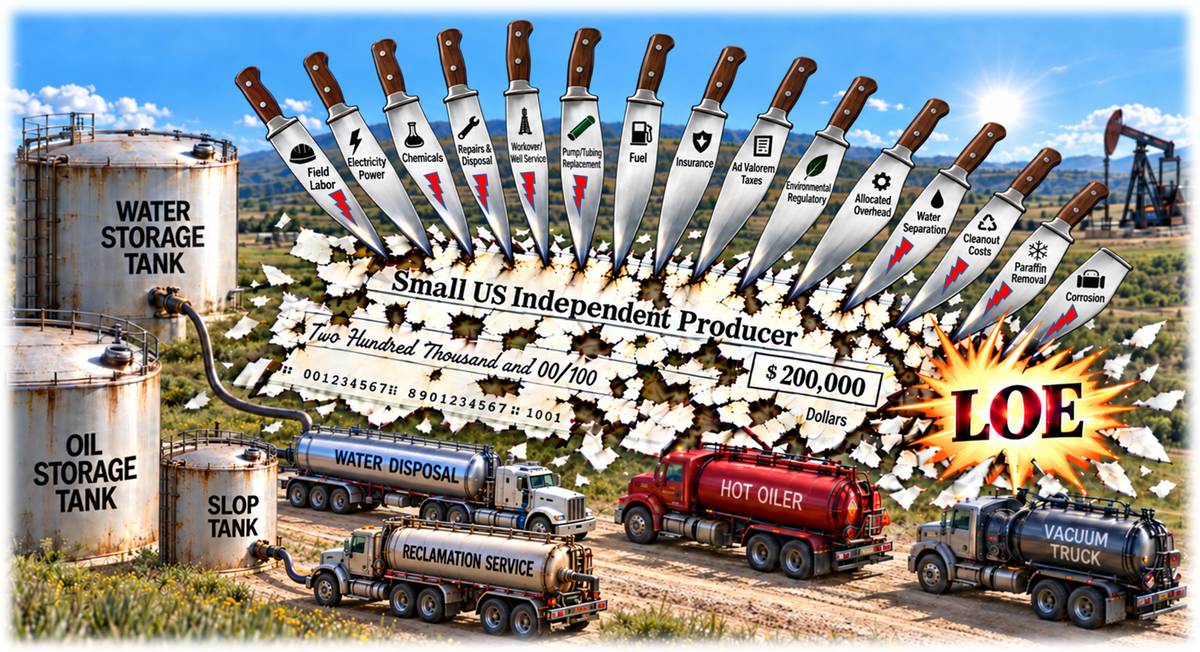
The oil buyer’s check can look healthy while lifting costs (LOE) take it apart, one line item at a time. Many of those items move with wellbore health:

  • Field labor
  • Electricity and power
  • Chemicals
  • Repairs and disposal
  • Workovers and well service
  • Pump and tubing replacement
  • Water separation
  • Cleanouts
  • Paraffin removal
  • Corrosion
  • Fuel
  • Insurance
  • Ad valorem taxes
  • Environmental and regulatory
  • Allocated overhead
Illustration: knives labeled with lifting-cost items cutting through a producer's revenue check, with water disposal, hot oiler, vacuum and reclamation trucks below
Profit death by a thousand cuts. Hot oilers, vacuum trucks and water disposal are the visible part of a bill that wellbore health drives.
The production system

Problems form throughout the system, especially in winter

In a perfect world, oil, gas and water flow cleanly from the formation to the sales tank. In reality, deposits form from the perforations to the disposal well.

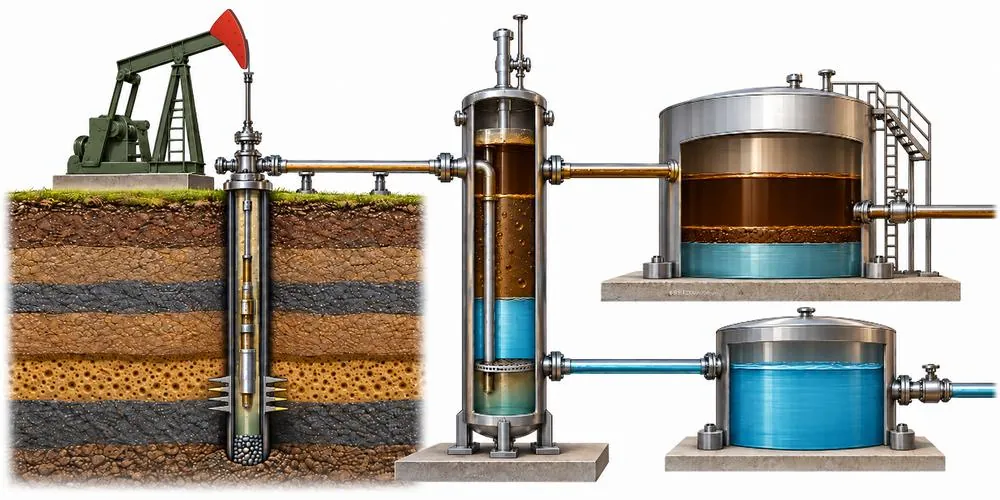
In a perfect world

Clean production system: pump jack, wellbore, gun barrel separator and tanks with clear oil and water
  • Oil, gas and water flow freely from the formation to the surface
  • The gun barrel separates oil and water cleanly
  • Sales oil meets spec, and clean water goes to disposal
  • No hot oiler, vacuum truck or acid job on the lease

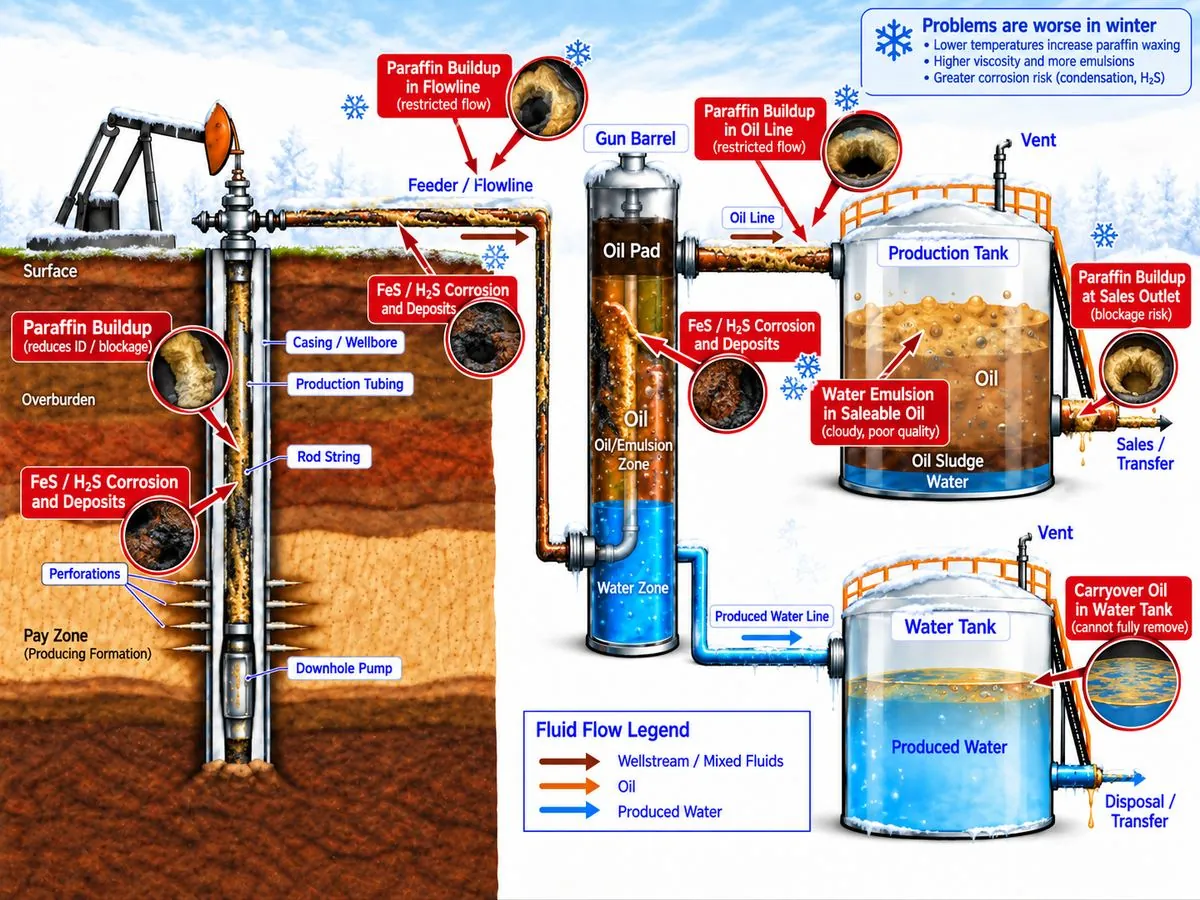
In reality: blockages throughout the system

Cutaway of a producing well and its surface equipment showing paraffin buildup, iron sulfide and H2S corrosion, water emulsion in saleable oil, and carry-over oil in the water tank

Paraffin builds in the tubing, flowline, oil line and sales outlet; iron sulfide and H₂S corrosion attack the wellbore and gun barrel; water emulsifies in saleable oil; oil carries over into the water tank. Cold weather means more waxing, higher viscosity, more emulsion and more corrosion risk.

Winter

makes every problem worse

Lower temperatures increase paraffin waxing, raise viscosity and tighten emulsions, and condensation adds to corrosion risk.

End to end

no single fix point

Deposits plug perforations and tubing, the feed line, the gun barrel, the sales and water tanks, and the filters and disposal well.

Paraffin impact

Rod weight and flow: the cost of deferred maintenance

How much production does one hung well cost? What does it cost to fish a separated rod string? Half an inch of wax is enough to put both on the table.

Clean rod

0.00 in of wax

Added weight per 1,000 ft
0 lb
Tubing flow restriction
0%Full flow area open
Peak volumetric efficiency

Deferred maintenance

½ in of wax buildup

Added weight per 1,000 ft
~730 lb
Tubing flow restriction
73.1% lostOnly 26.9% of the flow area left open
High risk: hung rod and separation

Figures from the Hiltek and BioActive presentation. They match ½ inch of wax around a ¾-inch sucker rod inside 2⅜-inch tubing.

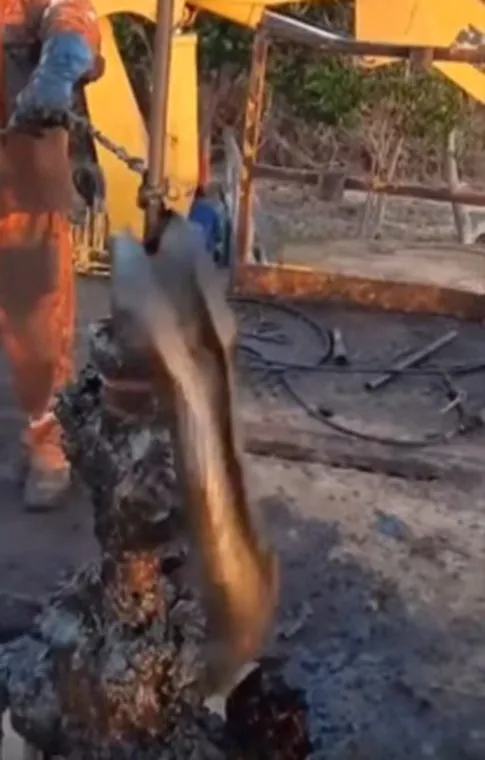
Worker pulling a sucker rod coated in thick black paraffin out of a well
Paraffin buildup, before treatment. Heavy wax chokes the rod body and the coupling space, forcing a severe restriction.
Power

and fuel to lift the extra weight

Wax adds weight to the rod string, so the prime mover works harder to lift it. On an electric unit that adds to the power bill; on a gas engine, the engine works harder and the pumping unit runs out of balance.

Fatigue

and separation

Cycling rods through a severe ½-inch restriction causes structural fatigue, until the sucker rods snap apart under heavy tension.

Downtime

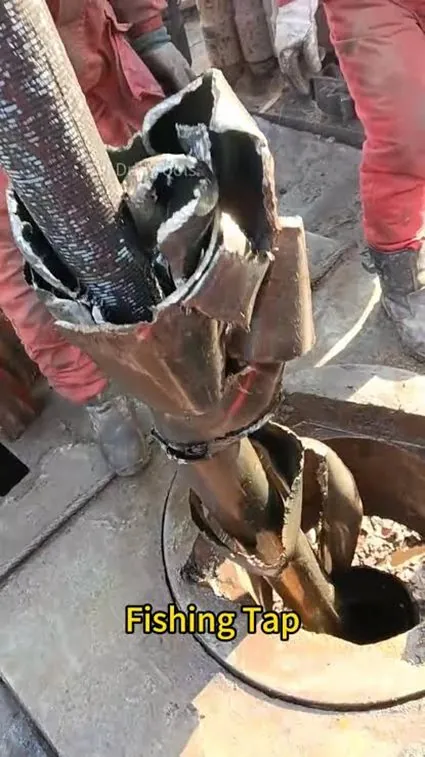
and a fishing job

A hung well stops producing. A separated rod string means an expensive, multi-day fishing job before the well produces again.

Torn and twisted pipe and rod string pulled up at a wellhead after a fishing job
Catastrophic separation and intervention. A dropped, structurally compromised rod string pulled back to the surface after an expensive, multi-day fishing job.
From deposit to dollars

How wellbore biology and chemistry destroy profitability

Each deposit shows up as a field symptom, and each symptom shows up as a cost.

ProblemWhat you seeWhat it costs you
Paraffin and asphaltenesWax, restricted flowHot-oil jobs, pump failures, lost oil, extra labor
Iron sulfide and H₂SBlack solids, black grease, corrosion, sour fluidsInhibitors, equipment replacement, price discounts, safety cost
ScaleRestricted tubing, damaged pumpsAcid jobs, more workovers, shorter lift life
Emulsions and poor separationHigh BS&W, tight oil-water interfaceExtra chemical, longer treating, higher disposal and trucking
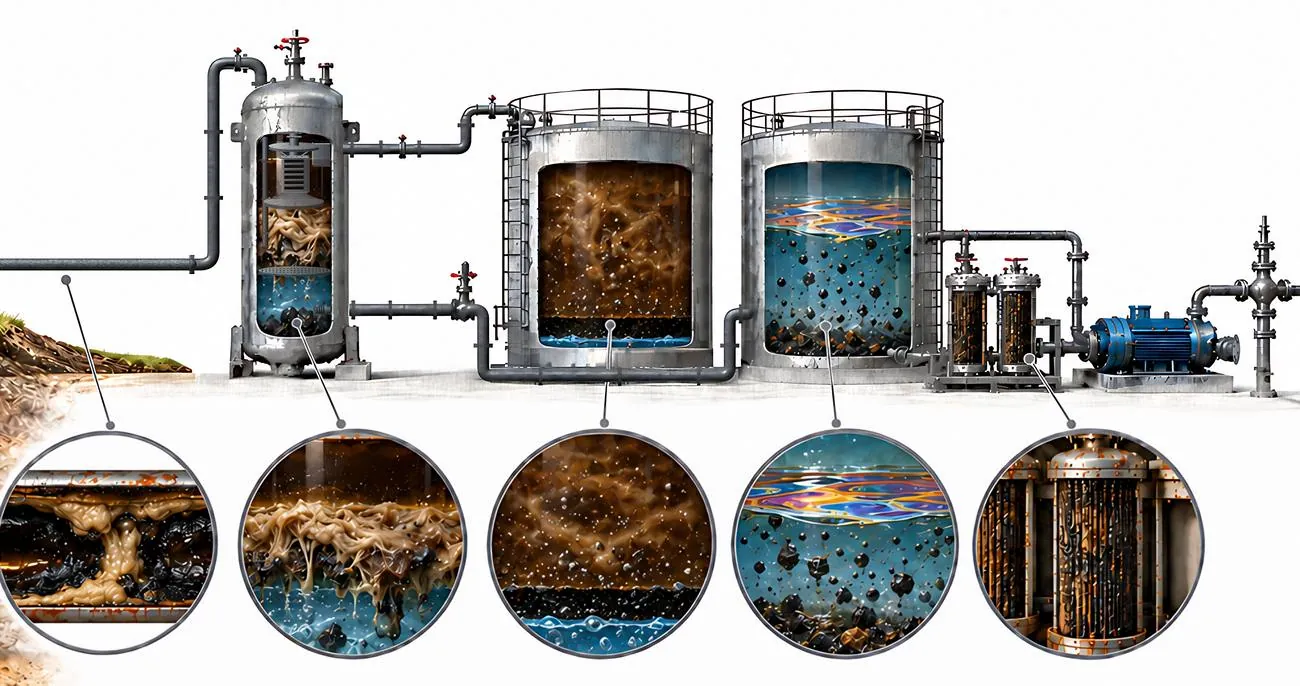
Surface facilities with magnified views of deposits in the flowline, separator, oil tank, water tank and filters
Back-pressureWax and FeS buildup raises resistance, load and intervention frequency.
Rag layerOil-wet solids trap water droplets at the interface and crowd the separation space.
Off-spec crudeWater and solids carry over; some tariffs reject more than 0.5% sediment and water.
Disposal constraintSolids foul filters and the injection face, adding pretreatment and pressure.
Six root causes

Why lifting costs keep coming back

Traditional fixes chase what has already formed, and the wellbore keeps rebuilding it. Five of these six problems involve biology. The sixth, paraffin, comes from the oil, but biology makes it harder to remove.

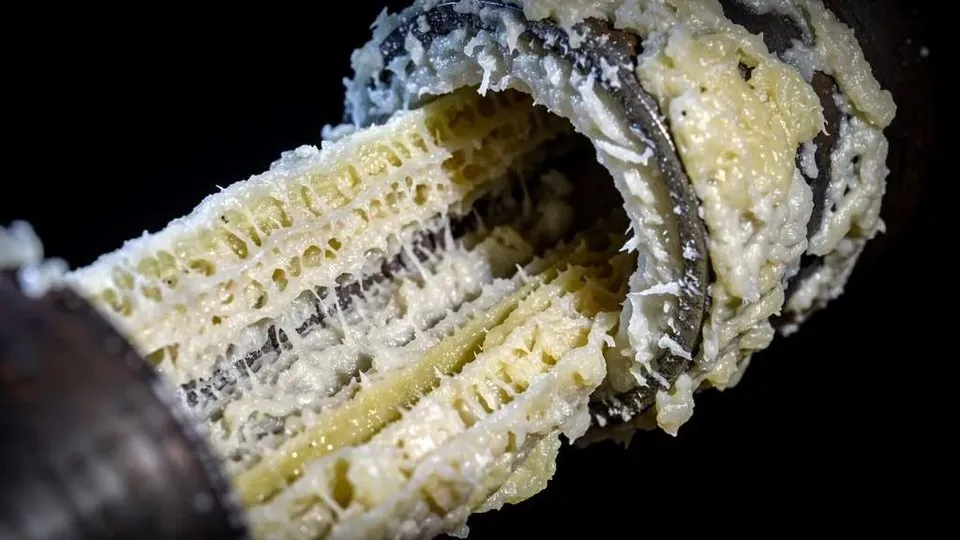
Thick, honeycomb-like paraffin wax filling a section of production tubing
From the oilLOE: medium

Paraffin (wax)

Part of the crude, not a bacterial problem

Where it starts
Long-chain paraffins dissolved in the oil crystallize as it cools and loses gas, building from the perforations to the flowlines and adding rod load.
Usual fix
Hot oil, solvents, scraping, rod pulls
Why it comes back
Heat melts today’s wax, but the oil keeps cooling and the long chains keep arriving.
What ChainBreaker does

BioActive microbes break long wax chains into shorter ones that stay liquid at lower temperatures, and the solvents they make keep the paraffin in solution, so it doesn’t separate from the oil and fall out. Biosurfactants help detach the wax so it flows out with the oil.

Managed as an ongoing program: the oil keeps delivering wax.
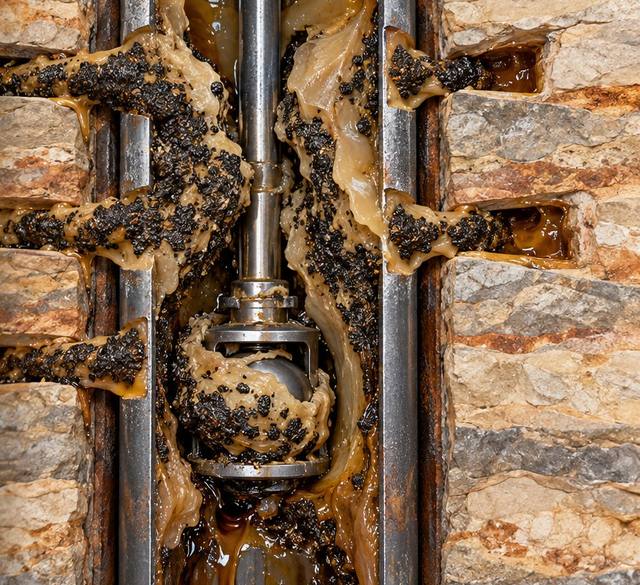
Black iron sulfide and asphaltene deposits around a downhole pump
Oil + biologyLOE: medium

Iron sulfide & asphaltenes

Sticky solids that plug perforations, screens and pumps

Where it starts
Iron sulfide forms from bacterial sulfide plus iron from corrosion. Asphaltenes drop out of the oil when pressure or chemistry changes.
Usual fix
Acid jobs, aromatic solvents, workovers
Why it comes back
Acid frees H₂S, solvents must match the crude, and the solids re-form.
What ChainBreaker does

Cuts the sulfide supply, so less new iron sulfide forms. BioActive reports its microbes break iron–sulfur bonds in FeS and degrade asphaltenic sludge, while biosurfactants help detach solids from steel and rock.

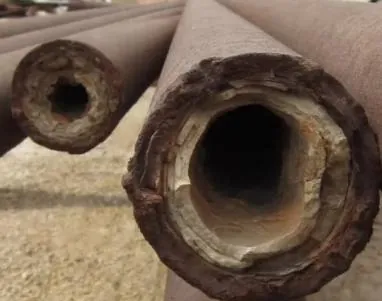
Cross-section of scaled production tubing with a narrowed bore
Biology + waterLOE: medium

Scale

Hard solids that cling to steel and pumps

Where it starts
Iron from corrosion and acid jobs meets bacterial sulfide to form FeS scale. Sulfate-reducing bacteria (SRB) accelerate it, and biofilm gives it a place to cling. Mineral scales such as calcite can also start on biofilm.
Usual fix
Acid jobs, scale inhibitors, cleanouts
Why it comes back
Acid dissolves iron sulfide but releases H₂S and iron, and the scale re-forms.
What ChainBreaker does

Fewer SRB means less new sulfide and less new FeS scale, and removing biofilm takes away places for scale to attach. BioActive reports its microbes break iron–sulfur bonds in FeS and disperse the iron, and that bond cleaving keeps calcium carbonate, barium sulfate and strontium sulfate from forming problem scale, while existing scale dissolves slowly, layer by layer.

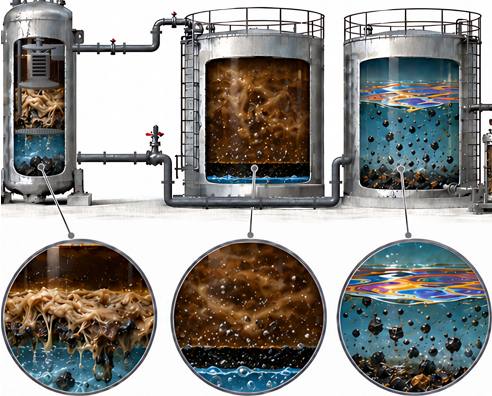
Separation vessels with magnified views of oil-water emulsion and rag layers
Oil + biologyLOE: medium

Emulsions & water separation

Oil and water that won’t separate

Where it starts
Pumps and valves shear oil and water into tiny droplets. Fine solids, asphaltenes and slime coat them so they can’t merge, building rag layers and off-spec oil.
Usual fix
Demulsifiers, heat, tank cleanouts
Why it comes back
It treats this batch; solids and slime keep making new emulsion, and solids keep feeding the rag layer, cutting settling time.
What ChainBreaker does

Microbes living in the water release biosurfactants that break the films holding droplets apart, in standard and reverse emulsions, and cut the iron sulfide and slime that feed them. The goal: cleaner separation and lower BS&W.

Verified with bottle tests and BS&W trends before and after treatment.

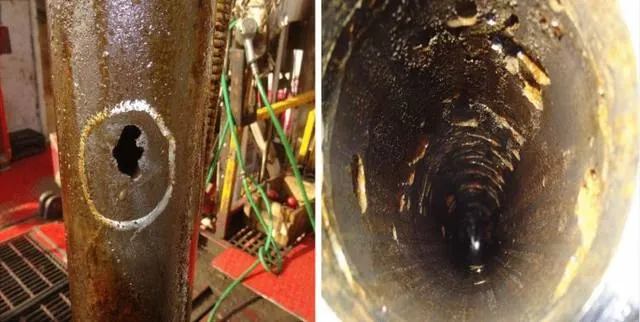
Corroded tubing with a hole and the pitted inside of a pipe
From the biologyLOE: high

Corrosion

SRB slime that eats steel from underneath

Where it starts
SRB form a biofilm on steel that keeps biocides and corrosion inhibitors away from it. Underneath, sulfide from SRB and organic acids from acid-producing bacteria (APB) eat small, deep pits. Dissolved CO₂ adds acid, and deposits hide the damage until a failure.
Usual fix
Inhibitors, biocides, pipe replacement
Why it comes back
Biofilm shields the bacteria and the pits from the chemical, and survivors regrow.
What ChainBreaker does

Loosens biofilm and the deposits that shelter it, and competes with acid- and sulfide-making bacteria for surfaces and food. Less acid and sulfide at the steel means slower pitting.

BioActive reports its microbes also make polysaccharides that coat tubing and rods with a film that guards against corrosion, as a corrosion inhibitor does. With the paraffin removed, the film can reach the metal.

Keep corrosion monitoring and inhibitors until your data shows a sustained improvement.

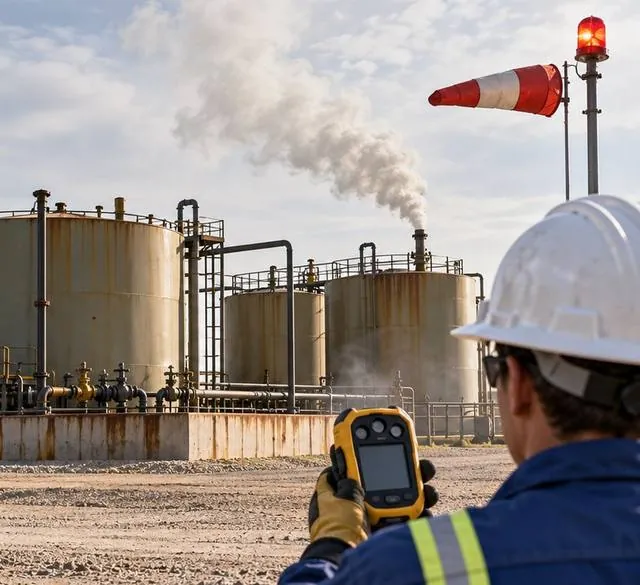
Field worker with a gas monitor near tank batteries
From the biologyLOE: medium

Hydrogen sulfide (H₂S)

Bacteria that make sour gas

Where it starts
SRB can be native to shallow, warm reservoirs, and they ride in on drilling, workover, injection and make-up water. They thrive in oxygen-free sludge, wax and biofilm, and give off H₂S. Iron sulfide in the sludge stores sulfide, and acid can release it as gas.
Usual fix
Scavenger chemicals, biocides
Why it comes back
Scavengers bind gas already made, a cost paid every month, while the bacteria keep producing.
What ChainBreaker does

Removes the sludge and biofilm where SRB live and competes for their food and space. BioActive reports its microbes use FeS sulfur to grow, clearing “black water.”

Gas monitors, procedures and scavengers stay in place until measurements show a sustained reduction.

The microbes behind it

Where the bacteria come from, and how they work together

Five of the six problems involve biology, and it is rarely one kind of bacteria. A community of microbes lives in slime on the steel and in the tank bottoms, and inland stripper wells give it what it needs: no oxygen, warm water, sulfate, and food from the oil.

Where they come from

Native

Already in the rock

Oil in reservoirs cooler than about 176 °F (80 °C) is often degraded by live microbes, and most SRB are active between about 50 and 160 °F (10–70 °C).

Seeded

Left by a century of operations

Field studies decades ago found many formations carry SRB “probably as a result of previous oil field operations.” Contaminated drilling mud inoculates every zone it passes through.

Pumped in

In every water you pump down

Supply wells, ponds, pits and city water all carry bacteria, so workovers, hot-water jobs and make-up water bring them in. SRB thrive in warm, still fluid such as packer fluid.

Injected

Waterfloods and disposal

Injection brings both sulfate and microbes, and reservoirs that started sweet can sour once flooding begins. Illinois alone has 6,535 injection and disposal wells.

Re-seeded

Lease tanks

Tank-bottom sludge is a breeding ground. One survey found over a million SRB and APB per milliliter in produced-water tanks, with biofilm on the bottoms, and they spread through any system the tanks feed.

Stagnant

Low flow

Microbes collect in stagnant zones, crevices and sediment: low rates, pump-off cycles, shut-ins and a still annulus.

Illinois Basin70–75% of the basin’s oil comes from reservoirs shallower than 3,000 feet. At the basin’s average heat gradient, that is roughly 90 °F at 3,000 feet and 125 °F at 5,500 feet: well inside the range where most SRB are active.

Bio slime: a team that protects itself

Slime is biofilm: microbes glued to a surface inside a matrix they make themselves. Each layer does a different job.

  1. Where it meets airSulfur-oxidizing bacteria (SOB)Turn H₂S into sulfur and sulfuric acid, which can drive pH to 1 or below, and regenerate sulfate for the SRB. They live in tank roofs and vapor spaces, gun barrels, pits and vents.
  2. Top of the slimeSlime formersBuild the slime and use up the oxygen, so the bottom stays oxygen-free even when the water around it is not.
  3. MiddleAcid-producing bacteria (APB)Turn oil compounds into organic acids that attack steel and feed the SRB.
  4. Against the steelSulfate-reducing bacteria (SRB)Breathe sulfate, give off H₂S and deposit iron sulfide. The black crust conducts electricity, and the steel under the deposits corrodes into deep pits.
  5. BelowSteelCasing, tubing, rods and tanks: pitted where the deposits sit.
>90%of slime is the matrix, not the cells: polysaccharides, proteins and DNA, mostly water
~1,000×more resistant to biocides for cells in slime than for free-floating cells, so problems come back after biocide jobs
~20%of corrosion failures are blamed on microbes, and up to 40% of internal pipeline corrosion

Testing can mislead. Water samples count free-floating bacteria, but the ones in slime usually matter most. Some H₂S makers, such as Halanaerobium, are not SRB, and standard SRB tests miss them.

Not all slime is harmful. Research shows some biofilms protect steel and others attack it, depending on the species. BioActive’s microbes compete with the harmful community and, BioActive reports, leave a protective film.

How H₂S and iron sulfide form

Hydrogen sulfide (H₂S)

  • Biology: SRB breathe sulfate instead of oxygen, feed on organic acids or hydrogen, and give off H₂S. This is the main source in shallow, cool wells.
  • Other microbes: some bacteria make H₂S from thiosulfate, and sulfate-reducing archaea matter mostly in hot reservoirs.
  • Geology: above about 140 °C (284 °F), sulfate reacts with oil directly. Those wells are sour from discovery.
  • Acid: acid dissolving iron sulfide releases H₂S.

A quick diagnosisA well that soured after waterflooding or workovers points to biology.

Iron sulfide (FeS)

  • Iron meets sulfide: dissolved iron from corroding casing, tubing and rods, and from acid jobs, meets H₂S and drops out as black particles (“black water”) and scale.
  • Same reaction as corrosion: on bare steel, Fe + H₂S → FeS + H₂.
  • Binds other deposits: wax binds iron sulfide fines and slime into hard “black wax,” and the fines help hold emulsions together.
  • Several crystal forms: no single acid or dissolver works on every deposit, and acid jobs in sour wells often don’t hold.
  • Fire risk: dried and exposed to air, it can ignite on its own, a known cause of tank fires and explosions during maintenance.
How MEOR works

ChainBreaker: a biochemical mini factory

ChainBreaker’s microbes feed on paraffin and other oil compounds downhole and make biochemicals that solve what traditional fixes can’t. This is microbial enhanced oil recovery (MEOR): it targets the bacteria, biofilm and sludge that keep rebuilding deposits, and the microbes keep working between treatments.

Traditional symptom chasing

  • Thermal methodsHot oil melts wax for a while; it can also push deposits deeper.
  • Harsh chemicalsAcid dissolves iron sulfide but releases H₂S and adds dissolved iron.
  • Solvents and diluentsTemporary relief; the deposits re-form because the source keeps going.

Systemic microbial approach

  • Biological root causeTargets the bacteria, biofilm and sludge that keep the problems coming back.
  • Ongoing actionBioActive microbes keep working between treatments.
  • NondestructiveBioActive uses no acid or heat, and naturally mitigates scale without harming steel casing and tubing.
Treating the symptoms
  1. Deposits build upWax, FeS, scale, emulsions
  2. Output falls, LOE risesPump failures, downtime, trucking
  3. Treat the symptomHot oil, acid, solvents, scavengers
  4. Temporary reliefUntil the deposits re-form

Back to the start: the bacteria, biofilm and sludge remain.

Treating the root cause
  1. Microbial treatmentNo acid, no heat, no upfront capital
  2. Remove the sourceBiofilm, sludge, SRB; long wax chains
  3. Fewer new depositsLess iron sulfide, scale and emulsion
  4. Lower LOE, slower declineLonger profitable life

Maintenance: about half the dose every 30–60 days.

Oil and gas begin as buried microscopic life. The right microbes keep it flowing.

Microbial metabolic process and byproducts

How ChainBreaker works

Downhole microbial metabolism replaces traditional production chemicals with targeted, naturally generated biochemicals.

ChainBreaker is a consortium of microbes, and they keep making these biochemicals between treatments: a mini regenerative chemical factory, in BioActive’s words.

  1. Nutrient inputs
    • Hydrocarbon Base: Paraffin and related oil compounds serve as the primary carbon source.
    • Inorganic Drivers: Iron and sulfur derived from iron sulfide (per BioActive reports).
    • Trace Elements: Essential nitrogen and phosphorus required for cellular function.
  2. In-situ bioprocessing
    • Step-by-step enzymatic breakdown of downhole hydrocarbons.
    • Metabolic activity powers microbial growth and drives chemical synthesis.
  3. Value-added outputs
    • Enhanced Solvents: Alcohols, ketones, and aldehydes that reduce oil viscosity.
    • Performance Agents: Biosurfactants and polysaccharides that mobilize trapped reserves.
From the microbesDoes the job ofWhat it does in the well
SolventsParaffin solventsClip long carbon chains into shorter ones and keep the paraffin in solution, so it doesn’t separate from the oil and fall out as wax.
Iron–sulfur metabolismIron sulfide dissolvers BiocidesBreak iron sulfide down by using its iron and sulfur, so the FeS goes away, and out-compete SRB and APB for food, starving them out.
PolysaccharidesCorrosion inhibitorsCoat tubing and rods with a film that guards against corrosion. With the paraffin cleared away, the film can reach the metal.
Bond cleavingScale inhibitorsCleave the bonds that build scale, so calcium carbonate, barium sulfate and strontium sulfate can’t form problem scale. Existing scale dissolves slowly, layer by layer.
BiosurfactantsDemulsifiers Salt inhibitorsBreak the films that hold emulsions together, help lift wax and solids off steel, and keep salt in solution so it doesn’t fall out in the well.

Why it mattersMany leases buy several of these chemicals today. One microbial program works on all five jobs, from inside the well.

As described by BioActive Services. Metabolism: Ji et al. and Agrawal and Gieg (2013); biosurfactants: Santos et al. (2016). Gas monitors, H₂S scavengers and corrosion inhibitors stay in place until your measurements show a sustained improvement.

Additional upside

Beyond lower lifting costs: where more value comes from

A healthy wellbore can also flatten the decline curve, keep saleable oil out of the disposal well and cut cleanouts at the surface. Clearing up H₂S could even turn sour leases into a revenue opportunity.

Also applies to injection wells

Stabilize, and turn the decline curve positive

Removing deposits, and the biology that keeps rebuilding them, lets a well hold its rate longer.

In treated wells, oil output climbed and then held while treatment continued. The field examples are in the Case Studies section.

Keep oil out of the disposal well

Poor separation sends saleable oil down the disposal well. Cleaner separation keeps it in the sales tank. In this example, a modest oil concentration costs about $900 a month.

  • Disposal water rate500 bbl/day
  • Oil concentration750 ppmw
  • Process temperature45 °F
  • Oil gravity32 °API
  • Net oil price$70.00/bbl
  • Oil lost each month13.0 bbl
  • Monthly financial loss$910.62

Clean up tanks, treaters and flowlines

The microbes work at the surface too. BioActive reports:

  • Tank bottoms broken upin about 60 minutes
  • Treaters cleanedin 4 to 5 hours
  • Annual tank and treater cleaningsnone in 5 years
  • Flowline breaks in one well field2 in 5 years

On a 100-mile oil pipeline, continuous injection softened the paraffin, and cleaning pigs stopped getting stuck (pipeline case).

Clear up sour leases

H₂S brings sour-handling costs, safety risk and potential price penalties. Clearing it up could turn sour oil and gas leases into a big revenue opportunity.

At PetroChina’s Qinghai oilfield, microbial treatment took six sour wells to zero H₂S for more than 140 days (case study).

Gas monitors and safety procedures stay in place until measurements show a sustained reduction.

MEOR today

Where MEOR is being used today

MEOR is not new. Field programs have run for decades, from Norway’s offshore Norne field to China’s largest oil fields and India’s stripper wells, with mixed but often positive results.

Major and national oil companies

CompanyWhat we foundSource
Equinor formerly StatoilRuns MEOR at the Norne field offshore Norway. The Norne licence won the Norwegian Petroleum Directorate’s improved-recovery prize for 2001, and Statoil said the method could raise Norne’s recovery “perhaps by almost 30 million barrels over its producing life.” In 2015 it was thought to be the only company using MEOR offshore. Statoil also collaborated with MEOR firm Glori Energy.Equinor, Offshore Technology, Glori 10-K
BPFunded the $500 million Energy Biosciences Institute (2007), whose fossil-fuel program set out to develop “new biological processes ... for improving oil recovery.” BP Exploration (Alaska) staff co-authored a 2014 study of reservoir microbes and souring in Prudhoe Bay and Milne Point wells.UC Berkeley, Frontiers in Microbiology
ShellOwns 34% of Petroleum Development Oman, which said in 2008 it was exploring naturally occurring bacteria to boost output, working with Sultan Qaboos University. PDO grants have since supported the university’s MEOR research.Gulf News, Oman Observer, PDO ownership
Sinopec and PetroChinaChinese fields have run many MEOR programs, at Shengli (Sinopec), Daqing, Changqing, Dagang and Fuyu. At Daqing’s Chaoyanggou block, 43 of 60 treated wells responded.Oil & Gas Journal
ONGC and Oil IndiaWith India’s TERI, have applied MEOR to stripper wells since 2004, across 100+ wells: over 43,590 tonnes of additional oil within six months.TERI
ConocoPhillips, Chevron, ExxonMobilWe found no public record of MEOR programs to boost recovery. With BP, Shell, Statoil and Total, they were among the funders of the Energy Institute technical program behind its 2017 review of nitrate treatment, a microbial method used to control reservoir souring.Energy Institute
Field results. Results from treated wells, a waterflood and a pipeline are collected in the Case Studies section.

Sources for this section